INDEXABLE INSERTS
TNGA Turning Inserts
Compare TNGA parent models by material and application before choosing a brand.
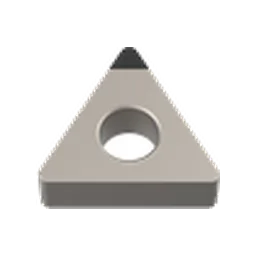
1Available optionsView options
4Available optionsView options
4Available optionsView options
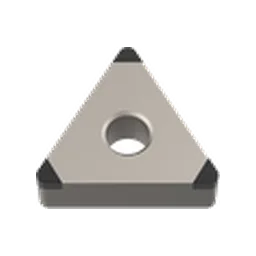
3Available optionsView options
No matching parent models.
TNGA covers 4 insert sizes in a triangular 60° shape giving six cutting edges — the lowest cost per edge, at the price of a weaker tip. We stock 12 variants across the family from Achteck, published for Cast iron, Non-ferrous, Hardened steel.
Sizes in this family
Every TNGA size we carry, with the measured geometry and how many variants are in stock. Open a size for the full cutting data and grade list.
| Size | IC (mm) | Thickness (mm) | Nose radius (mm) | Variants | Material groups |
|---|---|---|---|---|---|
| TNGA 160404 | 9.53 | 4.76 | 0.4 | 4 | K, N, H |
| TNGA 160408 | 9.53 | 4.76 | 0.8 | 4 | K, N, H |
| TNGA 160412 | 9.53 | 4.76 | 1.2 | 3 | K, H |
| TNGA 160402 | 9.53 | 4.76 | 0.2 | 1 | N |
Grades stocked in this family
PD20, PB30, PB60, PB90.
The family is published for Cast iron, Non-ferrous, Hardened steel. Pick the grade from the group you are cutting — how to read grade names.
Which size do you need?
- Inscribed circle sets the maximum depth of cut. As a rule keep ap under about two thirds of the IC.
- Nose radius trades finish against strength. A larger radius gives better surface finish at the same feed and a stronger edge, but raises cutting force and cannot produce tight internal corners.
- Check the holder. The holder designation must carry the same shape letter and the same size digit as the insert.
Related
Supplied by Beijing Henglang Precision Tools Co., Ltd.